Hygiene Science
Cross-Contamination 101: How Touching the Trash Spreads to Your Food
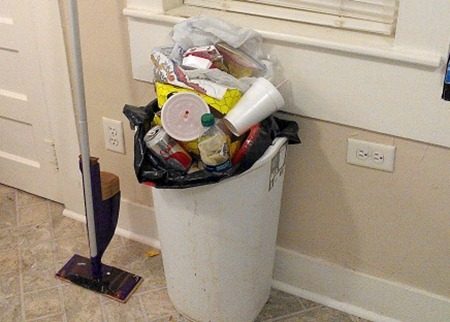
Cross-contamination is the technical term for "germs hopping from one place to another via your hands or shared surfaces." It's the mechanism behind most home foodborne illness — not initial contamination of food, but the transfer of bacteria from one place to a place where they don't belong.
The trash can is one of the most prolific cross-contamination sources in the home, and the path from "touched the lid" to "ate dinner contaminated with bacteria" is shorter and more direct than most people realize.
The transfer chain in practice
Walk through a normal cooking sequence and watch what happens:
You unwrap raw chicken from its plastic packaging. Some of the package juice gets on your hand. You toss the packaging into the trash, pushing the lid open with the same hand. You now have raw chicken bacteria on the trash lid.
You wash your hands. The lid still has the bacteria.
Twenty minutes later, you're stirring a pot. You toss a used napkin into the trash, pushing the lid with your now-clean hand. You just transferred bacteria from the lid back to your hand.
You taste the soup with your finger. You touch the salt shaker. You touch the sponge. You wipe your face. The bacteria are now in five new places, and the soup got the most direct path of transfer.
This isn't hypothetical. A 2023 USDA study had 371 participants prepare meals while researchers tracked bacterial transfer using a tracer organism. In 81% of meal prep events, one or more surfaces ended up contaminated. The trash lid was among the surfaces that consistently showed up as a transfer point.
Why hand washing alone doesn't fix it
Hand washing works perfectly when it happens. The problem is that it doesn't happen consistently. The same USDA study found that meal prep involves dozens of surface touches per minute, and the time pressure of cooking means people skip washes between touches, do shorter washes than recommended (less than 20 seconds), or skip soap entirely for "I just touched something light, it's fine" moments.
Beyond inconsistency, hand washing only addresses the hand-side of the transfer chain. The contaminated surface — the trash lid in this case — stays contaminated, and continues to recontaminate the next hand that touches it, including hands you just washed.
Effective cross-contamination control requires breaking the chain at the surface, not just at the hand.
Three ways to break the chain
The first is rigorous surface cleaning. Disinfect the trash lid every time you handle raw meat or change the bag. Wipe down counters frequently. Use separate cutting boards for raw meat. This works in theory and in commercial kitchens with trained staff. It rarely works in real homes, because the cognitive load is too high.
The second is reducing the number of touches. Anything that lets you avoid handling a contaminated surface in the first place reduces transfer events. This is why touchless trash cans, foot-pedal lids, and stick-on handles like SafeHandle work as well as they do — not because they sterilize anything, but because they prevent the contact from happening.
The third is structuring your kitchen workflow to keep raw and ready-to-eat foods physically separated. Raw meat zone on the right, produce on the left, never the two shall mix. This works but requires kitchen layout planning that most home cooks don't apply.
Why the trash lid is a high-leverage fix
Of all the cross-contamination points in a kitchen, the trash lid has an unusual property: you can solve it once and forget about it. A SafeHandle installation takes 60 seconds and addresses the contamination chain from that surface for years. Compare to "wash hands every time" which requires sustained behavior change forever, or "wipe the lid weekly" which requires remembering and doing.
One-time installations beat ongoing behavior changes. Almost always. The behavioral economics literature is consistent on this — humans are bad at maintaining new habits, and great at using one-time solutions that require no ongoing effort.
If you're going to fix one cross-contamination point in your kitchen this month, make it the trash lid, and make it a structural fix rather than a behavioral one.
Ready to stop touching your trash can lid?
Preorder SafeHandle — From $16.95Read next: Restaurants and SafeHandle: Two Years of Real-World Testing · SafeHandle Installation Guide: 60 Seconds, No Tools · More about our product